Emailhome page


world news

Culture News

economic news

sports news

domestic news

      Archive:  

Wednesday, March 10, 2010     


Italy’s Political Dignity Exposed
 
By Kayhan Int’l Staff Writer
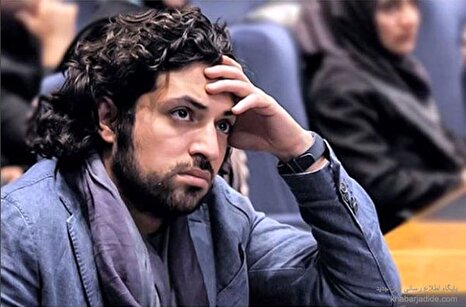
The Italian police arrested an Iranian reporter earlier this week on suspicion of smuggling arms, although the truth is that he has been jailed because of his reports on the unpleasant realities of Italy.
Hamid Masouminejad, the Rome correspondent of Islamic Republic of Iran Broadcasting, was detained on March 3 along with another Iranian and five Italians on suspicion of planning the export to Iran of antitank weapons and explosives via Britain and Switzerland!
Italian police claim that the Iranians in custody are members of the Iranian secret services. Nevertheless, it is absolutely clear that Masouminejad's arrest is linked to his hard-hitting coverage of real events in Italy, including a recent workers' strike. Just as importantly, Italian authorities had warned him in recent months over his independent reporting - the very same people who still claim that they are committed to defending the rights of journalists and independent reporters.
The Foreign Ministry, however, on Friday summoned Italy's ambassador in Tehran over the baseless detention. The Culture Ministry also released a statement that said, "If the Italian government wants to treat our reporter this way in order to gratify the cruel wishes of the United States, Britain and Israel, it will certainly see a reciprocal effect on its reporters by the government of Iran."
Italian prosecutor Armando Spataro claims the arrests were made after a nine-month investigation, including intercepted phone conversations and e-mail messages. Yet it is obvious that the politically motivated arrests are not justified and lack any credibility or sensible explanation. Certainly, it is a blind obedience to Israeli demands and a childish charade that only undermines the political dignity of the Italian government.
All told, Italy still has one of the lowest levels of press freedom in Europe. A new report by Freedom House has classified Italy as "partly free", where censorship is applied in television and the press. Just for the record, in 1994, Italian journalist Ilaria Alpi was killed in Mogadishu, Somalia, together with her cameraman Miran Hrovatin under mysterious circumstances. At the time of the murder, she was following a case of weapon and illegal toxic waste traffic in which she reported that the Italian Army and other institutions were involved.
Into the bargain, Reporters Without Borders states that the conflict of interests involving Prime Minister Silvio Berlusconi and his vast media empire is still not resolved and continues to threaten news diversity and press freedom. The International Federation of Journalists has also joined the criticism recently, objecting to the passage of a new law, which critics believe is designed to control the Italian media.
Realities as such could perhaps explain why the question of a political conflict of interest for Italy's prime minister is still in the back of the minds of many foreign correspondents, including Masouminejad?
The Berlusconi administration has to listen, though: With its poor track record of press freedom in Europe, Italy is indeed closer to many despotic regimes than it might like.

President Ahmadinejad in Afghanistan

TEHRAN (Dispatches) -- Iranian President Mahmoud Ahmadinejad was to head to Afghanistan on Wednesday, his first trip to Tehran's eastern neighbor since the re-election last August of his counterpart Hamid Karzai.
"The president is going on Wednesday" to Afghanistan, Foreign Ministry spokesman Ramin Mehmanparast told reporters at his weekly press conference.
On Sunday, an Iranian news agency, Mehr, reported that Ahmadinejad was to make a one-day trip to Kabul on Monday to hold talks with Karzai on the challenges facing war-torn Afghanistan.
But an official at Ahmadinejad's office later denied the timing.
Ahmadinejad and several Iranian officials have repeatedly called for the withdrawal of U.S.-led forces from Afghanistan, saying their presence was stoking the Taliban insurgency.
Washington and Tehran are both sworn enemies of the extremist militia which ruled in Kabul from 1996.
Iran, which has close ethnic and religious ties with Afghanistan, has long suffered from the effects of opium production in its neighbor, with easily available heroin fuelling a big rise in drug use at home. Afghanistan is the source of 90% of the world's heroin.
Mehmandparast said on Tuesday Iran's determination in fighting drugs trafficking had cost the country dearly.
"We have been very serious in fighting narcotics and suffered extravagant costs and have lost many people in this fight."
The spokesman said drugs production in Afghanistan has multiplied since the occupation of the country in 2001.
"The occupying countries have defied support for the spread of narcotics in line with their objectives of promoting extremism and given that a special place," Mehmanparast said.
Iran sees no will on the part of Western countries to fight drugs production, the spokesman said.
"The Americans have said they were cooperating in this regard but we see no resolve for fighting drugs Among the Americans, the British and other countries which have a serious presence in Afghanistan.
"If there was a serious will, the volume of drugs production would not have shot to 9,000 tons from 200 tons (after the invasion)," Mehmanparast added.
Iran's Ali Asghar Soltanieh, who is chairing the UN Commission on Narcotic Drugs (CND) meeting in Vienna, called on the U.S. and Europe on Monday to step up efforts to tackle drug trafficking in the region.
Soltanieh said a “collective sense of duty” was needed from all countries to fight drug trafficking which he described as “one weapon of mass destruction” and “a threat destroying the foundation of families.”
"Those countries which have been directly or indirectly affected by this (problem), including European, the United States or other countries, they have to exercise and show maximum cooperation and feel the shared responsibility," said Soltanieh, who is Iran's envoy to UN organizations.
U.S. envoy to the CND Glyn Davies said he had met with Soltanieh on Friday, and added that Washington was prepared to work with Iran on tackling global drug flows.
"We are very happy to work with the chair even if he is from a country which we have differences with."
Soltanieh confirmed the meeting with Davies but said he met the U.S. envoy only as CND chairman, adding that the meeting did not constitute a bilateral meeting.
He added that he did not expect the delegation sent from Tehran would meet with U.S. officials during the week-long summit.
Soltanieh said Iran's cooperation with Afghanistan and Pakistan in fighting drug trafficking had been successful and that it could be the base for wider cooperation.
Afghan-grown poppies fuel a $65 billion heroin and opium market that supplies millions of addicts.

 
Security Pact Signed With Qatar

DOHA (Dispatches) -- Iranian Interior Minister Mustafa Muhammad Najjar on Tuesday signed a security agreement with Qatari Minister of State for Interior Affairs Abdullah Bin Nasser bin Khalifa al-Thani in Doha.
The agreement underlined the need to develop bilateral and international cooperation in security, the fight against organized crime and against terrorism, Najjar said in a press briefing after the signing ceremony.
"We agreed to increase cooperation in border protection between our two countries and fight drug and human trafficking ... as well as crime in both countries," he said.
The two countries also agreed to combat illegal immigration, fraud and money laundering.
"We are preparing for another agreement with Pakistan to be signed soon," said Najjar, who arrived in Doha on Monday for a two-day visit.
Najjar, who led a political and economic delegation, said Iran was keen on developing the security agreements it had previously signed with other Persian Gulf Cooperation Council countries, including Saudi Arabia, Kuwait and Oman, as well as Iraq, Turkey and Syria.
The defense minister also warned that Tehran has "great means of deterrence" to face any possible attack over its nuclear program.
"We are highly confident about our capacities, and our great means of deterrence," he said. "We do not feel in danger... If someone tries to endanger our national security, we will retaliate and make him regret his action," he added.
Tehran is locked in a standoff with the West over its nuclear program which Iran insists is for peaceful purposes. The occupying regime of Israel has not ruled out striking Iran's nuclear sites.
Najjar said Iran is working on strengthening relations with its Arab neighbors in the oil-rich Persian Gulf region to "ensure security and stability in the region."
Qatar, which maintains good relations with Iran, hosts the U.S. Al-Udeid air base and As-Sailiyah camp, which is the headquarters of the U.S. Central Command since 2002.
On Tuesday, Qatari Prime Minister Sheikh Hamad bin Jasim bin Jabir al-Thani once again underlined his county's support for Iran's right to access nuclear technology.
"We have always wanted the realization of Iran's rights in grounds of peaceful nuclear activities," the Qatari official said in a meeting with Najjar. "We will do our best to resolve Iran's nuclear issue," he stressed.
Sheikh Hamad further called the mutual security pact signed by the two countries a "step forward" in cooperation between the two sides, and expressed the hope that Tehran-Doha relations would further increase.
He also welcomed the growing economic ties between the two countries, and stated, "We do not allow any other government to interfere in Iran-Qatar ties. We would spare no efforts to further expand these relations."

 
Iran Blasts 'Thuggish' U.S. General: West Not Sincere in Fighting Terror

TEHRAN (Dispatches) -- Top Iranian officials lashed out on Tuesday at U.S. General David Petraeus for his comments asserting the Islamic Republic is becoming a "thugocracy", saying such terms are only used by "thugs."
"The murderous government of the United States is a government of thugs which has killed thousands of Iraqis, Afghans and Palestinians," parliament speaker Ali Larijani said in the assembly.
"This exhausted general has insulted the Iranian government by calling it a government of thugocracy. It is understandable why you (Petraeus) utter such comments because the people of the region hate you," the official IRNA news agency quoted Larijani as saying.
Foreign Ministry spokesman Ramin Mehmanparast too hit out at Petraeus.
"Such language is used by thugs... this attitude is of thugs," Mehmanparast said at his weekly press conference.
"We feel officials in the United States are furious. We don't know why they are furious... maybe due to their failure in launching a soft war (against Iran) or that the role of their intelligence services has been revealed in the case of (Abdolmalek) Rigi," he said.
Iran captured top terrorist Rigi last month and accused the U.S., Britain and the occupying regime of Israel of supporting him in carrying out attacks against the Islamic Republic.
Mehmanparast also criticized Germany for releasing the leader of the terrorist group Party for a Free Life in Kurdistan (PJAK).
Abdolrahman Haji Ahmadi was arrested at his apartment on Friday, but was released Monday.
The Iranian spokesman described Germany's initial arrest and its decision to release him later as a "charade", saying Western countries are not being sincere in fighting terrorism.
PJAK is an offshoot of the internationally-recognized terrorist group, the Kurdistan Workers' Party (PKK), which conducts deadly operations in Kurdish-populated regions of western Iran.
Mehmanparast said that evidence at hand indicated that "Europe has been a safe haven for terrorists" and continues "to support terrorism despite chanting slogans in defense of human rights."
"We saw the same pattern about Mujahedeen Khalq Organization (MKO). This criminal group was taken off the [terrorist] list in Europe. We also saw another instance in Abdolmalek Rigi's case where the footprints of foreign intelligence services were seen in supporting his group (Jundullah)."
The same holds true about the PJAK leader, who was released by Germany despite Iran's hard evidence available regarding the group's numerous acts of terror, Mehmanparast said.
According to a New York Times report in October 2007, PJAK has "direct or indirect discussions" with American officials. Its ringleader reportedly visited Washington in the summer of 2007. The group is branded as a terrorist group by the United States.
Mehmanparast further criticized Germany over plans to grant asylum to Iranians, saying European countries are turning a blind eye to fabricated stories for political reasons.
A German official said on Monday Germany plans to grant asylum to a number of Iranian refugees in a move that appeared targeted at people viewed by Tehran as dissidents.
"Some people who have no problem returning to Iran ... present their situation as if lives are endangered and European countries also want to use this matter to say Iranians are massively moving to Western countries," Mehmanparast said.
"Many of their cases are not true and those who say such stories are just looking for gaining benefits of having asylum in those countries," he said, calling Germany's move "unlawful".
Iran was Germany's 42nd largest export market in 2008 and is a heavy buyer of machinery, chemical products and metals but some firms, notably engineering conglomerate Siemens, said in January it would not accept further orders from Iran for political reasons.
Iranian media said in January that two German diplomats were detained for some time during riots on Dec. 27.

 
Calls Rise for Diplomacy on Iran

BEIJING (Dispatches) – China on Turkey on Tuesday insisted diplomacy was the way to end the standoff over Iran's nuclear energy program, as Western nations continue to push for new sanctions against Tehran.
"We have said all along that the Iranian nuclear issue has to be peacefully resolved by diplomatic means through dialogue and negotiations," Foreign Ministry spokesman Qin Gang told reporters.
"At present there is still space for diplomatic efforts, dialogue and consultation."
The comments came ahead of a visit by British Foreign Secretary David Miliband, due in China on Sunday for a four-day trip during which the issue of Iran's nuclear energy program was likely to come up.
The spokesman said Miliband would meet Chinese leaders to "exchange ideas on China-UK relations and other major international and regional issues of common interest".
China, one of five veto-wielding members of the UN Security Council and a close ally of Iran, has so far refused to agree to tougher sanctions against the Islamic Republic, despite increasing pressure from Washington.
Iran said on Tuesday it hoped China would not give in to pressure to agree to new sanctions.
"China is a great country which enjoys enough power to pursue its own decisions independently without being pressured by America," Foreign Ministry spokesman Ramin Mehmanparast said at a news conference in Tehran.
"Of course our expectations from such a big country is the same ... to pursue its foreign policies independently and just observe its own national interests," he said, citing Iran's close relations with China.
A draft Western document proposes restricting more Iranian banks abroad, but does not call for sanctions against Iran's oil and gas industries.
Turkish Prime Minister Recep Tayyip Erdogan said in Riyadh on Tuesday that further sanctions on Tehran would bear no fruit.
"I don't believe that any further sanctions will yield results," Erdogan told journalists, adding that earlier rounds of sanctions "have never yielded results".
Turkey, which has good relations with its neighbor Iran, has offered to host an exchange of Iran's low-enriched uranium (LEU) with 20% enriched uranium to be supplied by world powers to Tehran as part of a UN-drafted deal.
Tehran and world powers are locked in a stalemate over the deal which envisages shipping out Iran's LEU to France and Russia for further conversion into higher-grade uranium.
Mehmanparast said Tuesday that Iran considers a nuclear fuel swap with any supplier as a valid option providing its conditions are met.
He said that Iran's "priority is to obtain fuel" for a Tehran medical research reactor.
Iran says it would agree to a deal if guarantees are provided by the West that the fuel would be shipped to the country in a timely manner, but such demand has been shrugged off by the West.
Iran is currently enriching uranium to the level of less than 20% and the country's nuclear chief says the special plates for the fuel will be manufactured in the next few months.
Mehmanparast made it clear Tuesday that Iran was still open to a swap.
"If the International Atomic Energy Agency suggests a country in possession of the 20-percent enriched fuel, we are ready to buy the fuel. Besides, if there are countries ready for a swap which will fulfill our conditions, we are ready; otherwise, we will produce the fuel [ourselves]," he said.
On threats of new sanctions against Iran, Mehmanparast said that such punitive measures were legally baseless as Tehran's nuclear work is being fully monitored by the UN nuclear agency.

 
Iran to Help Zimbabwe Fight Western Pressure

TEHRAN (Dispatches) -- President Mahmoud Ahmadinejad says Iran will help Zimbabwe as much as possible in view of the sanctions imposed on Harare by the West.
Ahmadinejad made the remarks during a meeting with Zimbabwean Minister of State for Presidential Affairs Didymus Mutasa in Tehran.
The Islamic Republic will stand by Zimbabwe against "illegal pressure," he added.
Ahmadinejad said Iran has always condemned the illegal pressure imposed by hegemonic powers meant to force the Zimbabweans to surrender.
He praised the African nation for its resistance against the odds and predicted that independent nations would have a bright future.
Ahmadinejad also called for the implementation of all the agreements signed by the two nations.
Mutasa relayed Zimbabwean President Robert Mugabe's message to the Iranian president.
He also asked Iran to increase cooperation with Zimbabwe and to invest more in the country.
Meanwhile, Deputy Foreign Minister of Myanmar Boomang Myth conferred on Tuesday with Foreign Minister Manouchehr Mottaki on expansion of mutual relations.
Iran and Myanmar have adopted a similar stand on issues such as defying bullying powers and unjust international system given their membership in the Non-Aligned Movement (NAM), Mottaki said.
Mottaki said common interests shared by the two nations urge both sides to have constant talks and negotiations on various issues.
There are ample grounds for expansion of political, commercial and cultural cooperation between the two countries such as energy, oil, gas agriculture, technical and scientific cooperation, exchange of university students and academic cooperation, said the Iranian minister.
The Myanmar minister, for his part, voiced his country’s willingness for expansion of all-out relations with Iran in political, economic and cultural fields.
Myanmar is to increase the current level of economic and commercial cooperation with Iran in agricultural, energy, scientific and academic areas, he said.
He also outlined the latest political developments in his country.